

Whiplash is caused by a rapid forward-and-backward or side-to-side movement of the head and neck. It is common after car accidents, especially rear-end collisions, but it can also happen from falls, sports impacts, or other sudden trauma.
Whiplash Treatment in Fishers, Indiana
Whiplash Treatment
Explore movement-based whiplash care in Fishers focused on neck mobility, muscle guarding, headaches, upper-back mechanics, and daily function.
What Is It?
Whiplash
At Back to Balance Chiropractic & Wellness, we take a movement-based approach to whiplash focused on restoring neck mobility, reducing protective muscle guarding, improving cervical and upper-back mechanics, and rebuilding tolerance for daily movement. Whiplash commonly occurs when the head and neck are rapidly forced forward and backward or side to side. This can create strain through the muscles, joints, ligaments, discs, and surrounding nerves of the cervical spine. Care is based on how the injury is affecting your neck, upper back, shoulders, headaches, and daily function. The goal is to restore comfortable motion, improve control, and support a structured return to normal activity.
Symptoms
Common Symptoms of Whiplash
Whiplash symptoms vary depending on the severity of the injury, the direction of force, prior neck history, and the tissues involved. Common symptoms may include:
01
Neck pain, stiffness, or reduced range of motion
02
Pain that worsens with turning, looking up, looking down, or prolonged posture
03
Headaches, often starting near the base of the skull
04
Upper back, shoulder, or arm discomfort
05
Muscle tightness, guarding, or tenderness through the neck and shoulders
06
Dizziness, lightheadedness, or difficulty with balance
07
Numbness, tingling, or weakness into the arm or hand
08
Jaw discomfort, visual symptoms, fatigue, sleep disruption, or difficulty concentrating in some cases
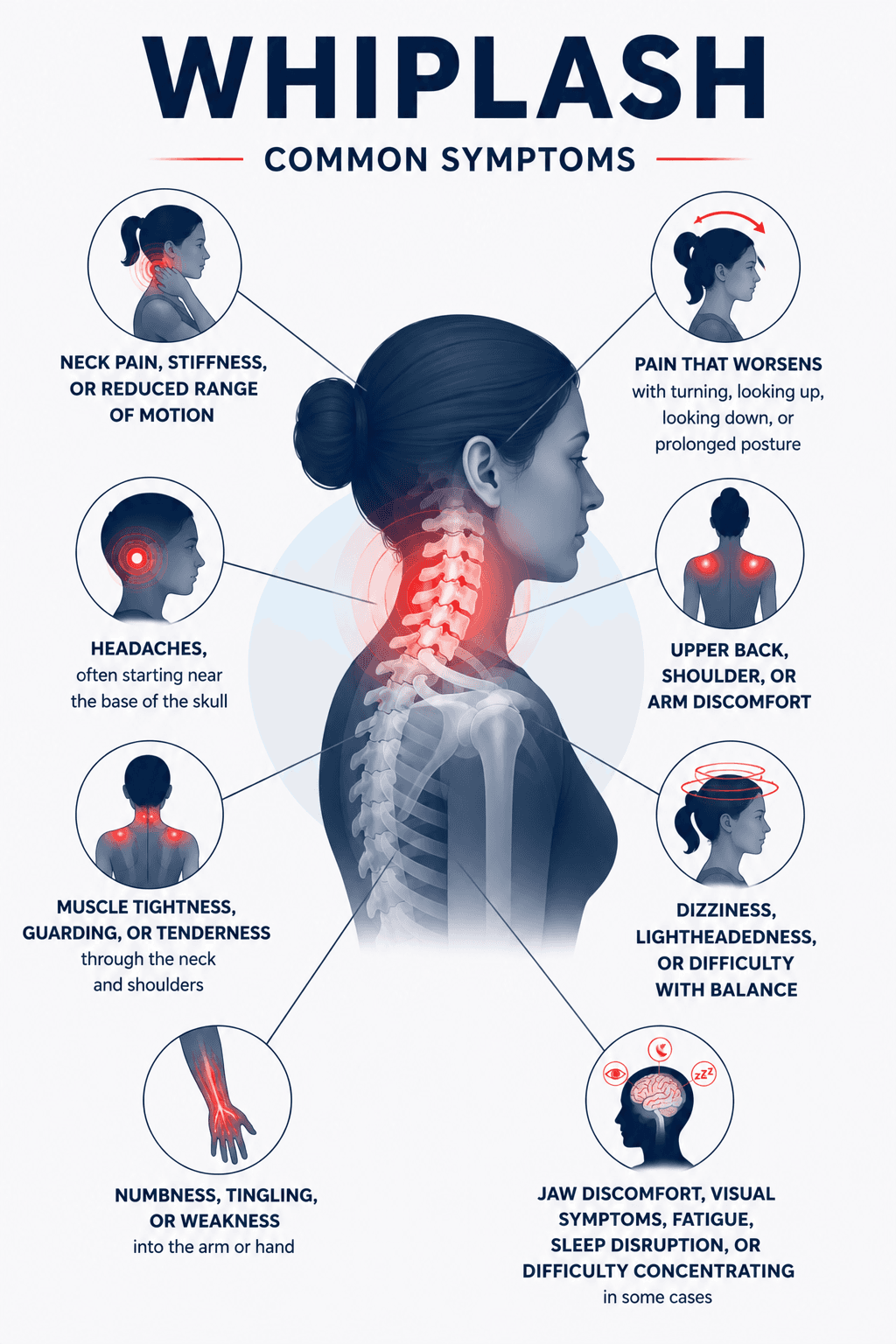
A structural overview of whiplash, neck strain, and common cervical movement symptoms.
Common Causes
Common Causes & Contributors
Whiplash is most often caused by sudden force through the neck. Symptoms can also be influenced by injury severity, prior neck issues, protective muscle guarding, posture, and how quickly appropriate movement is restored. Common causes and contributors may include:
Rear-end or side-impact motor vehicle collisions
Sports collisions or contact injuries
Falls that force the head and neck to move suddenly
Sudden acceleration-deceleration or side-to-side trauma
Muscle, ligament, or joint strain in the cervical spine
Irritation of cervical discs, facet joints, or surrounding nerves
Protective muscle guarding that limits neck and upper-back movement
Prior neck pain, headaches, stiffness, or poor movement tolerance
Prolonged bracing, fear of movement, or delayed return to appropriate activity
When To Seek Care
When to Seek Care
Consider a professional evaluation if:
Neck pain or stiffness develops after a car accident, fall, sports injury, or sudden impact
Pain is not improving after a few days or is becoming more intense
You have headaches, dizziness, jaw discomfort, or upper-back pain after the injury
Symptoms are limiting sleep, driving, work, exercise, or daily activity
You notice numbness, tingling, weakness, or pain traveling into the arm or hand
You are avoiding normal movement because the neck feels guarded or unstable
You want a conservative plan focused on restoring motion, strength, and function
How Care Helps
How Care May Help
Conservative care for whiplash focuses on reducing irritation, restoring neck and upper-back mobility, improving muscle control, and helping you return to normal activity at an appropriate pace. Your individualized plan may include:
The goal is not only to reduce neck pain. The emphasis is on restoring motion, improving control, reducing protective guarding, and rebuilding the neck’s ability to tolerate daily movement.
01
Detailed evaluation of neck, upper-back, shoulder, and neurological function
02
Chiropractic adjustments when clinically indicated to improve cervical and thoracic mobility
03
Soft tissue therapy to address muscle guarding, tension, and protective spasm
04
Mobility work to restore comfortable range of motion
05
Corrective exercise focused on deep neck flexor strength, postural control, and shoulder support
06
Progressive strengthening to rebuild tolerance for daily tasks, driving, work, and exercise
07
Proprioceptive retraining to improve head-neck awareness and balance when appropriate
08
Activity modification and recovery strategies to avoid prolonged rest or excessive bracing
09
Referral or co-management when imaging, medical evaluation, or specialty care is appropriate
Clinical Takeaway
Whiplash is more than a sore neck. It is a movement and soft-tissue injury that needs a clear recovery plan.
Most cases improve with appropriate conservative care, but persistent symptoms should be evaluated so mobility, strength, nerve irritation, headaches, and daily function can be addressed directly.
FAQ
Questions About Whiplash
Answers to a few of the most common questions patients may have before getting started.
Related Care
Explore connected services and conditions
Learn how related symptoms, movement patterns, and treatment options may fit into a broader care plan.
Related Services


Related Conditions



Ready for a clearer plan after a neck injury?
Schedule a consultation to evaluate your neck movement, symptoms, and recovery needs, and discuss conservative options for restoring mobility and daily function.