

BPPV itself is often not dangerous, but dizziness can increase fall risk. New or severe dizziness should be evaluated to rule out other causes.
BPPV Treatment in Fishers, Indiana
BPPV Treatment
BPPV can cause sudden spinning sensations when rolling over, looking up, bending forward, or changing head position.
What Is It?
Benign Paroxysmal Positional Vertigo (BPPV)
BPPV is a common type of vertigo that can cause brief episodes of spinning or dizziness with changes in head position. Evaluation focuses on identifying positional triggers and determining whether repositioning techniques or additional care may be appropriate.
Symptoms
Common Symptoms of Benign Paroxysmal Positional Vertigo (BPPV)
BPPV symptoms are often brief but can feel intense. Common symptoms may include:
01
Sudden spinning or dizziness
02
Symptoms triggered by head position changes
03
Nausea or motion sensitivity
04
Loss of balance or unsteadiness
05
Difficulty focusing during an episode
06
Avoidance of movements that trigger dizziness
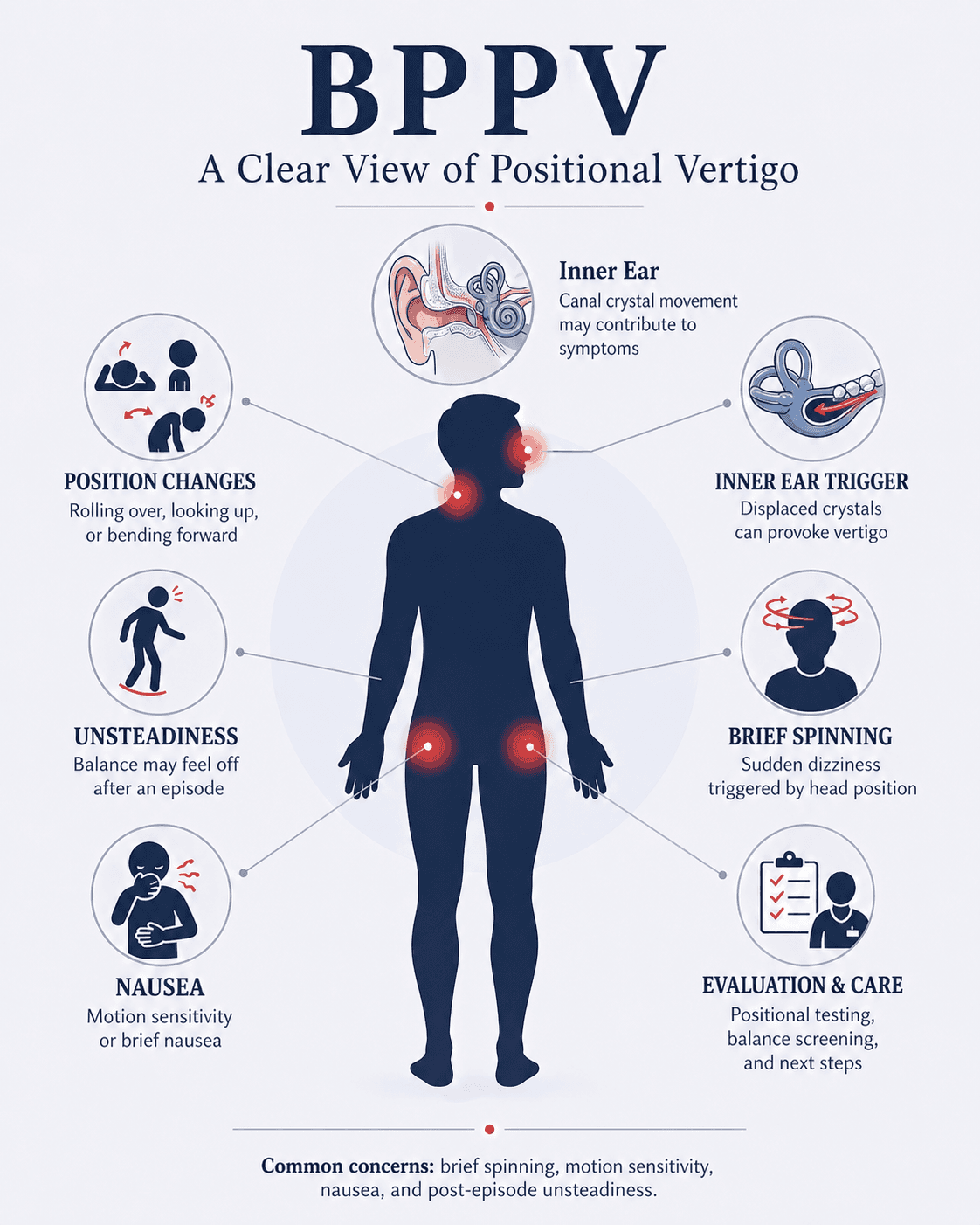
BPPV is often triggered by changes in head position
BPPV commonly causes brief spinning sensations with movements such as rolling over, looking up, bending forward, or changing position.
Positional Vertigo
BPPV care starts with identifying the movement trigger.
A focused evaluation helps determine whether dizziness behaves like BPPV and whether positioning techniques may be appropriate.
- Position-based evaluation
- Balance and neck movement screening
- Clear guidance on next steps
Common Causes
Common Contributors
BPPV may be associated with:
Inner ear crystal displacement
Head position changes
Previous head injury
Age-related inner ear changes
Periods of reduced movement or prolonged positioning
Neck stiffness that affects movement tolerance
When To Seek Care
When to Seek Care
An evaluation may be helpful if:
Dizziness is triggered by rolling over or looking up
Episodes feel brief but intense
You feel unsteady after dizzy spells
You are avoiding normal head movement
You want to determine whether BPPV may be involved
How Care Helps
How Treatment May Help
Care depends on symptom behavior and evaluation findings. Treatment may include:
The goal is to identify likely contributors, reduce positional dizziness when appropriate, and improve confidence with daily movement.
01
Positioning techniques when appropriate
02
Balance and stability exercises
03
Movement assessment
04
Neck mobility evaluation
05
Chiropractic care when neck mechanics are contributing
FAQ
Questions About Benign Paroxysmal Positional Vertigo (BPPV)
Answers to a few of the most common questions patients may have before getting started.
Related Care
Explore connected services and conditions
Learn how related symptoms, movement patterns, and treatment options may fit into a broader care plan.
Related Services



Ready to evaluate positional dizziness?
Schedule a consultation to identify triggers and discuss appropriate next steps.