

When you sleep at night, your foot naturally relaxes and points downward, allowing the tissue on the bottom of your foot to shorten and tighten up. When you step out of bed in the morning, your body weight suddenly forces that tight, unconditioned tissue to stretch rapidly. This sudden physical pull on the sensitive attachment site triggers that sharp, stabbing sensation. Once you walk around for a few minutes, the area warms up and loosens up slightly.
Plantar Fasciitis Treatment in Fishers, Indiana
Plantar Fasciitis Treatment
Plantar fasciitis is an overuse issue causing thick tissue irritation on the bottom of the foot, leading to intense heel pain during your first morning steps or after periods of rest.
What Is It?
Plantar Fasciitis
Every morning starts the same. You step out of bed and a sharp pain shoots through your heel. After a few minutes of walking it loosens up, but by the end of the day the discomfort is back again. Whether you're trying to get through a long work shift, walk around downtown Fishers with your family, log miles on the Nickel Plate Trail, or keep up with your weekend pickleball matches, plantar fasciitis can make every step frustrating. At Back to Balance Chiropractic & Wellness, we look beyond the heel itself to evaluate your foot mechanics, ankle mobility, and calf tension to identify why the tissue keeps getting overloaded and what needs to change for lasting improvement.
Symptoms
Common Symptoms of Plantar Fasciitis
Heel and foot symptoms typically follow a very predictable pattern throughout the day. Common signs include:
01
Sharp, stabbing pain in the bottom of the heel when taking your first steps out of bed in the morning
02
Feeling like you're stepping on a bruise, nail, or sharp rock directly under your heel
03
Foot pain near the heel that builds after prolonged periods of standing at work or walking on hard surfaces
04
Dull, aching soreness that intensifies hours after running, exercising, or playing sports
05
Limping or walking differently on the outside of your foot to avoid putting pressure on the painful heel
06
Stiffness in the bottom of the foot that temporarily improves with walking, only to ache worse later in the day
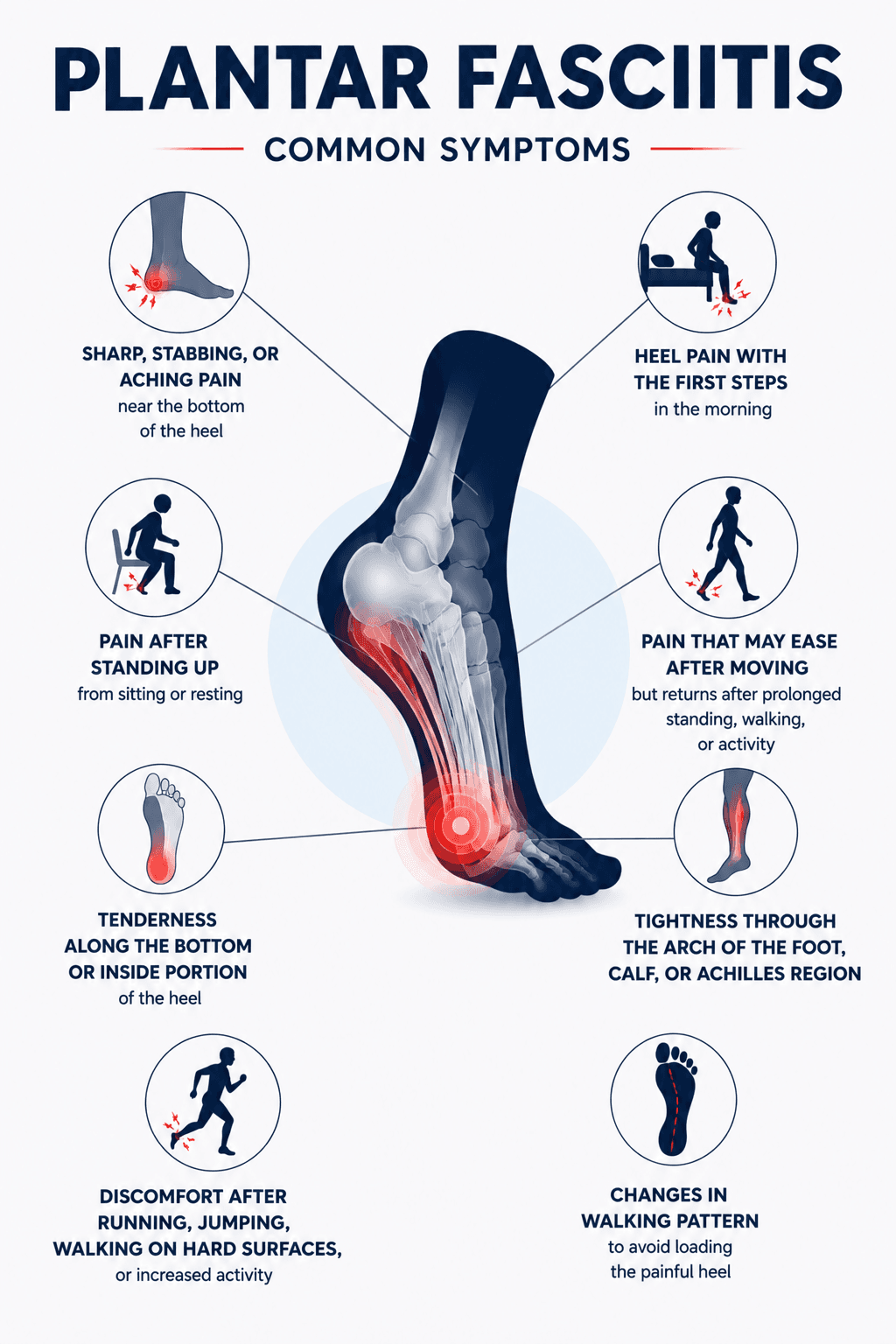
Plantar fasciitis often involves the foot, ankle, and calf
Heel pain may be influenced by plantar fascia irritation, calf tightness, limited ankle mobility, foot mechanics, footwear, and repetitive loading.
Foot & Ankle Mechanics
Heel care that looks beyond where it hurts.
The bottom of your foot acts as a shock absorber that is completely dependent on how your calves, ankles, and hips move. We evaluate your entire lower body movement pattern to pinpoint exactly why your heel is taking on too much physical stress.
- Full foot, ankle, and lower-limb movement evaluation
- Targeted soft tissue therapy to calm tight calves and thick foot tissues
- Simple rehab exercises to help your foot absorb pavement impact comfortably
Common Causes
Common Contributing Factors
Plantar fasciitis rarely happens from a single injury; it typically develops over time when the demand on your foot outpaces its ability to recover. Common factors include:
Chronic calf muscle tightness, which pulls hard on the heel bone and creates constant tension under the foot
Flat feet, high arches, or foot mechanics that place extra stress on the heel during your daily stride
Stiff ankle joints that restrict normal movement and force the bottom of the foot to over-stretch
Standing at work all day on hard surfaces without sufficient support or conditioning
Increasing your running mileage, walking distance, or court time too quickly before your feet can adapt
Sudden weight changes or carrying heavy loads that place immediate, increased demand on the arches
When To Seek Care
When to Seek Care
An evaluation at our Fishers office is highly recommended if:
Sharp morning heel pain is making your first steps out of bed dreadfully uncomfortable
You are actively limping, changing how you walk, or cutting family outings short because of foot pain
You have tried resting for a few weeks, but the burning or aching returns the moment you resume normal activity
Persistent heel pain or bottom of the foot limits your standing tolerance at work or on the trails.
You want a structured, conservative care plan to fix the root cause of your foot pain before considering invasive options
How Care Helps
How Treatment May Help
At Back to Balance Chiropractic & Wellness, your care is personalized based on your daily workload, training goals, and specific mechanical limitations. Your individualized care plan may include:
By combining hands-on therapy to lower your immediate pain with exercises to support your arch, we help you get back to walking, running, and daily life comfortably.
01
Chiropractic adjustments when clinically appropriate to support normal joint movement in the foot, ankle, and lower body
02
Soft tissue therapy to reduce severe muscle tension in the calves and improve flexibility along the bottom of the foot
03
Dry needling when clinically appropriate to target deep knots and help trigger a healthy healing response in stubborn tissues
04
Customized foot and ankle exercises to build durability so you can stand at work all day without deep aches
05
Return-to-walking and running progressions to safely rebuild your distance limits on the paths
06
Practical recommendations on footwear choices, stretching routines, and activity modifications to protect your recovery
FAQ
Questions About Plantar Fasciitis
Answers to a few of the most common questions patients may have before getting started.
Related Care
Explore connected services and conditions
Learn how related symptoms, movement patterns, and treatment options may fit into a broader care plan.
Related Services


Related Conditions





Ready to take your first steps without sharp heel pain?
Do not let persistent plantar fasciitis or foot stiffness dictate your day. Schedule a thorough clinical evaluation in Fishers today to look at your movement patterns from the ground up and start a practical plan for recovery.