

Degenerative changes themselves cannot be reversed. However, treatment can help improve mobility, reduce irritation, and support better overall function.
Degenerative Disc Disease Treatment in Fishers, Indiana
Degenerative Disc Disease Treatment
Degenerative disc disease develops gradually as spinal discs lose hydration and flexibility over time. This natural aging process can contribute to stiffness, reduced mobility, recurring back or neck pain, and nerve irritation in some cases.
What Is It?
Degenerative Disc Disease
At Back to Balance Chiropractic & Wellness, we take a thoughtful, whole-person approach focused on movement, nervous system function, spinal mechanics, and long-term resilience. We help patients manage degenerative disc disease by addressing stiffness, improving mobility, and reducing mechanical stress on the spine and surrounding structures. Learn more about degenerative disc disease below and how we can help.
Symptoms
Common Symptoms of Degenerative Disc Disease
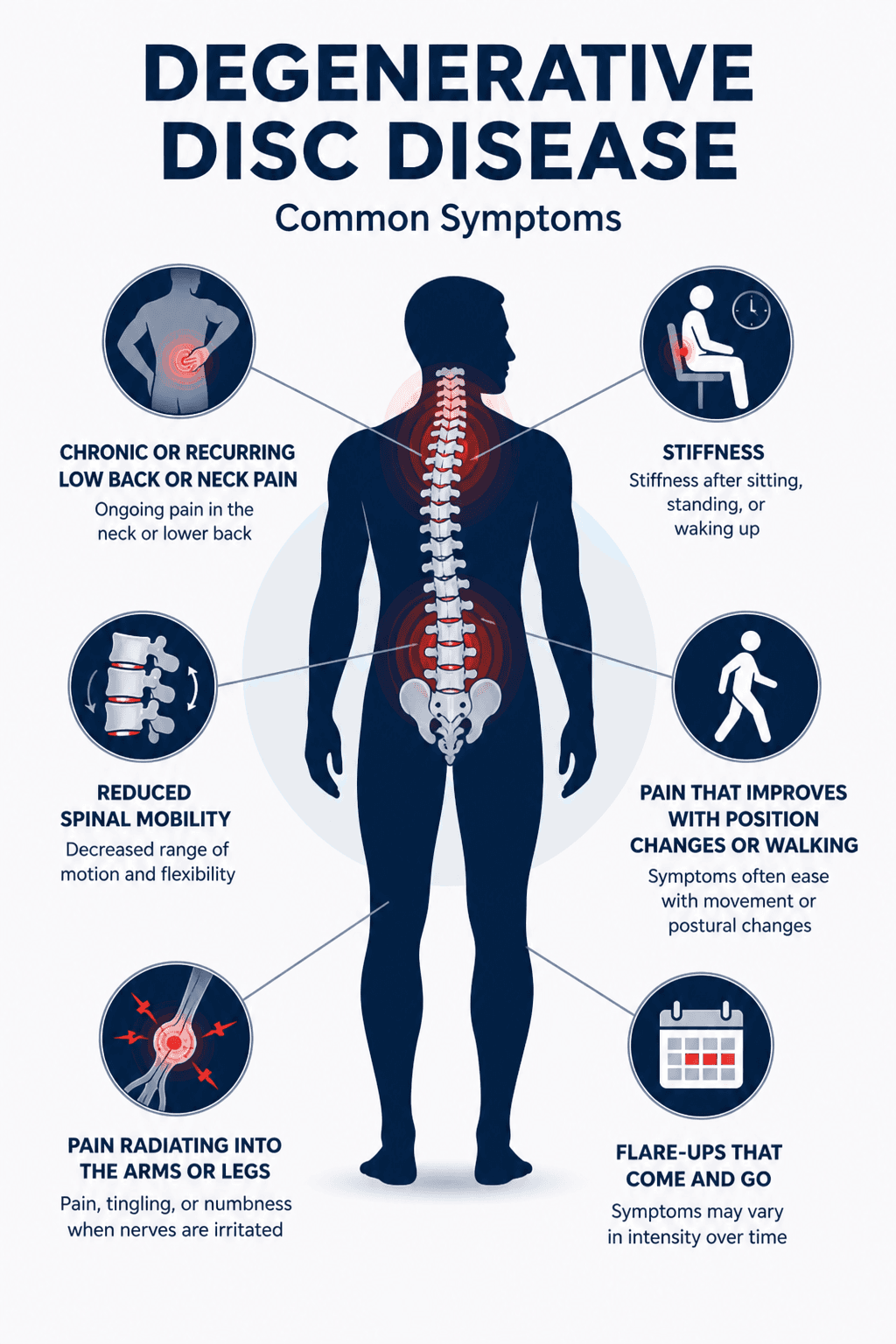
Symptoms vary depending on the area of the spine involved and how irritated the surrounding joints or nerves are. Common symptoms may include:
01
Chronic or recurring low back or neck pain
02
Stiffness after sitting, standing, or waking up
03
Reduced spinal mobility
04
Pain that improves with position changes or walking
05
Pain radiating into the arms or legs when nerves are irritated
06
Flare-ups that come and go over time
Common Causes
Common Contributors
Degenerative disc changes can be influenced by age, activity history, injuries, and repetitive stress. Contributing factors may include:
Natural disc hydration and flexibility changes over time
Repetitive spinal loading or prolonged sitting
Prior injuries or recurring back and neck pain patterns
Reduced spinal mobility
Muscle weakness or poor movement control
Disc irritation that affects nearby joints or nerves
When To Seek Care
When to Seek Care
Consider a professional evaluation if:
Back or neck stiffness is limiting daily activities or work
Symptoms are becoming more frequent or intense
Pain radiates into an arm or leg
You experience numbness, tingling, or weakness
You are looking for a conservative, movement-based plan to restore function and prevent progression
How Care Helps
How Care May Help
Targeted care for degenerative disc disease focuses on restoring spinal mobility, reducing mechanical stress on discs and nerves, and building long-term stability and resilience. Your individualized plan may include:
The emphasis is on helping you move with greater ease, manage flare-ups effectively, and maintain spinal function for the long term.
01
Chiropractic adjustments when clinically indicated
02
Spinal decompression therapy when appropriate
03
Targeted soft tissue therapy
04
Corrective exercise and movement retraining
05
Comprehensive movement assessment
06
Activity modification and recovery strategies
Clinical Takeaway
Degenerative disc disease is a common, gradual process, not a diagnosis that defines what you can or can’t do.
While structural changes in the discs can’t be reversed, how your body moves, adapts, and functions plays a major role in how you feel. With the right approach, many people are able to improve mobility, manage symptoms, and maintain an active lifestyle.
FAQ
Questions About Degenerative Disc Disease
Answers to a few of the most common questions patients may have before getting started.
Related Care
Explore connected services and conditions
Learn how related symptoms, movement patterns, and treatment options may fit into a broader care plan.
Related Services

Foundational Care
Chiropractic
Precise care designed to improve joint motion and support comfortable movement.
Explore service
Active Movement & Strength
Functional Rehabilitation
Targeted exercises designed to restore strength, stability, and movement.
Explore service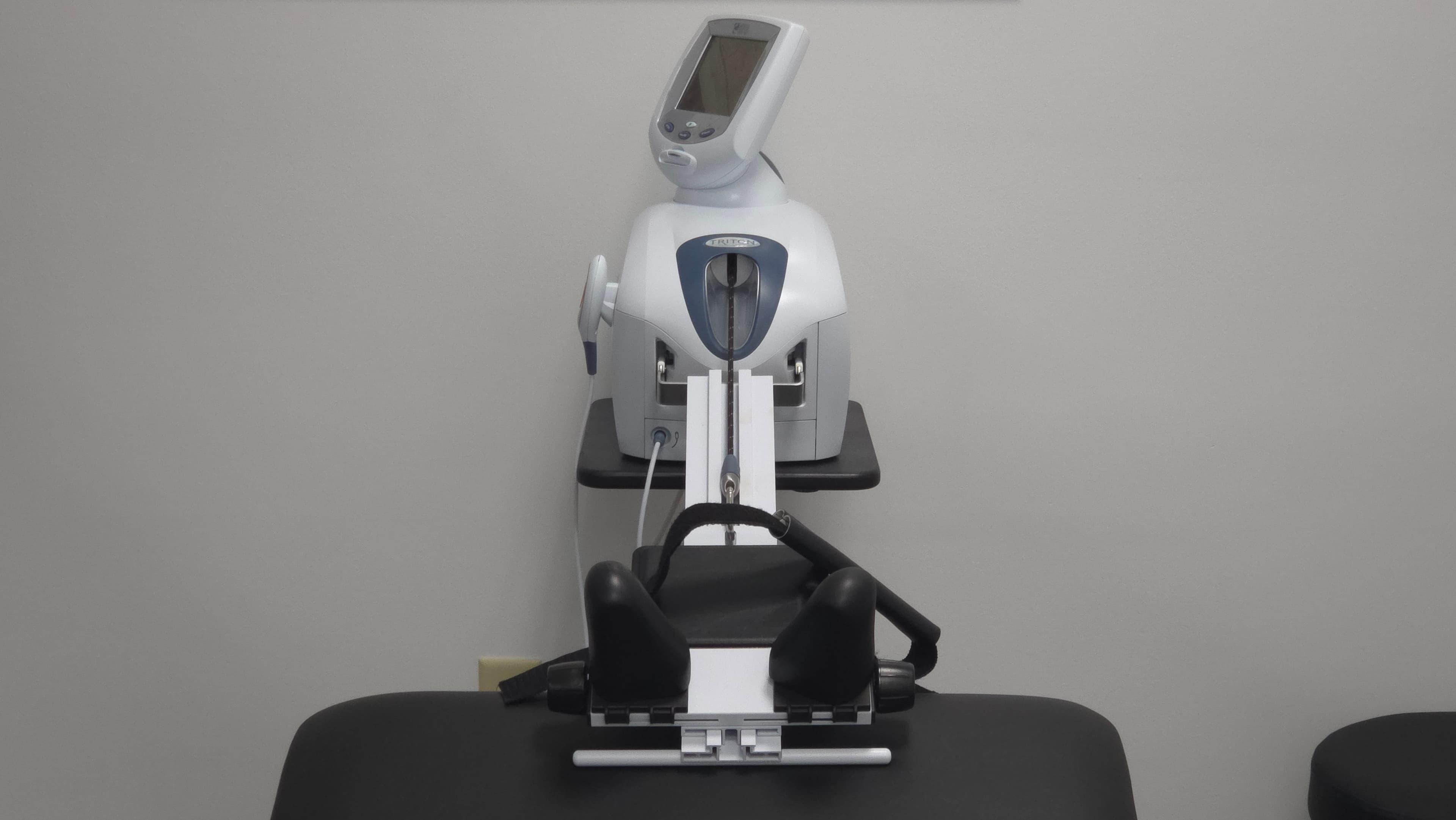
Non-Surgical Traction
Decompression
Non-surgical spinal decompression that relieves pressure on discs and nerves.
Explore serviceRelated Conditions



Ready for a plan for disc-related stiffness or pain?
Schedule a consultation to evaluate spinal movement and discuss conservative options for improving daily function.