

No. While sciatica often begins with low back or buttock pain, the defining feature is nerve-related symptoms that travel into the leg. This may include sharp pain, burning, numbness, tingling, or weakness.
Sciatica Treatment in Fishers, Indiana
Sciatica Treatment
Sciatica refers to nerve-related symptoms that travel along the path of the sciatic nerve. It typically originates from irritation or compression of nerve roots in the lower spine, producing pain that radiates from the low back or buttock into the leg, and often the foot or toes.
What Is It?
Sciatica
At Back to Balance Chiropractic & Wellness, we take a mechanical, movement-based approach to sciatica. We focus on identifying the source of nerve irritation, improving spinal and hip mechanics, reducing mechanical stress, and building a plan that supports long-term function. Learn more about sciatica below and how we can help.
Symptoms
Common Symptoms of Sciatica
Sciatica symptoms vary depending on the specific nerve root involved and the degree of irritation. Symptoms usually affect one side of the body and may include:
01
Sharp, burning, or electric-like pain traveling from the low back or buttock into the leg
02
Pain that worsens with sitting, bending, coughing, sneezing, or prolonged standing
03
Numbness, tingling, or “pins and needles” sensation in the hip, leg, foot, or toes
04
Muscle weakness in the leg, ankle, or foot
05
Difficulty walking, standing upright, or finding a comfortable position
06
Recurring flare-ups triggered by specific postures, movement patterns, or activity levels
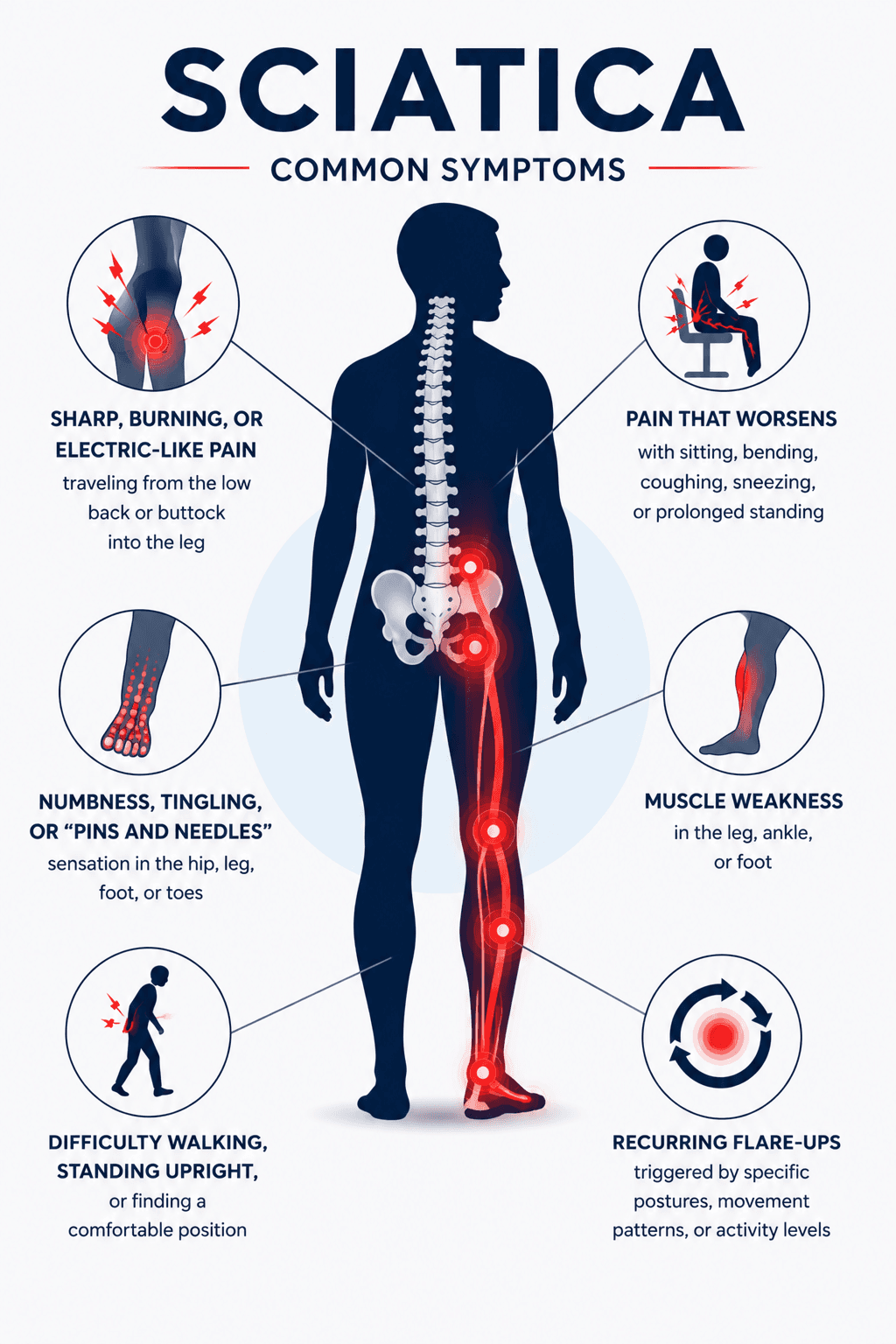
A structural overview of sciatic nerve irritation and lower-body pain patterns.
Common Causes
Common Causes & Contributors
Sciatica is a symptom of irritation or compression affecting the sciatic nerve or the lumbar nerve roots that form it. Common causes and contributing factors include:
Lumbar disc herniation or disc bulge irritating a nearby nerve root
Degenerative disc disease or age-related spinal changes
Spinal stenosis with narrowing around the nerve exit points
Spondylolisthesis, where one vertebra shifts forward relative to another
Arthritic changes that reduce space around the nerve roots
Piriformis syndrome or soft-tissue entrapment in the hip region
Restricted hip, pelvis, or lumbar mobility increasing mechanical stress
Prolonged sitting, repetitive bending, poor lifting mechanics, or core/hip weakness
When To Seek Care
When to Seek Care
Consider a professional evaluation if:
Pain travels from the low back or buttock into the leg
Symptoms include numbness, tingling, or weakness in the leg or foot
Pain interferes with walking, sitting, standing, sleep, work, or exercise
Symptoms are becoming more frequent, intense, or difficult to manage
Self-management or rest has not resolved the irritation
You want a conservative plan focused on identifying and addressing the mechanical driver
How Care Helps
How Care May Help
Targeted care for sciatica focuses on identifying the source of nerve irritation, reducing mechanical stress on the nerve, and restoring movement quality and strength. Your individualized plan may include:
The goal is not just temporary symptom relief. The emphasis is on improving how the spine, hips, and surrounding tissues function so the irritated nerve has a better environment to recover.
01
Detailed biomechanical assessment of spinal, hip, and lower-body movement patterns
02
Chiropractic adjustments when clinically indicated to restore segmental mobility
03
Spinal decompression therapy when appropriate to reduce disc-related pressure
04
Targeted soft tissue therapy to address surrounding muscle tension and restrictions
05
Nerve mobility exercises, sometimes called nerve flossing, when appropriate
06
Corrective exercise focused on core stability, hip control, and lumbar support
07
Activity modification strategies to protect the nerve during recovery
Clinical Takeaway
Sciatica is a symptom of nerve irritation, not a standalone diagnosis. Effective care starts with identifying the mechanical driver and restoring proper movement.
Most cases respond well to conservative, movement-based care when the source of irritation is clearly addressed.
FAQ
Questions About Sciatica
Answers to a few of the most common questions patients may have before getting started.
Related Care
Explore connected services and conditions
Learn how related symptoms, movement patterns, and treatment options may fit into a broader care plan.
Related Services

Foundational Care
Chiropractic
Precise care designed to improve joint motion and support comfortable movement.
Explore service
Active Movement & Strength
Functional Rehabilitation
Targeted exercises designed to restore strength, stability, and movement.
Explore service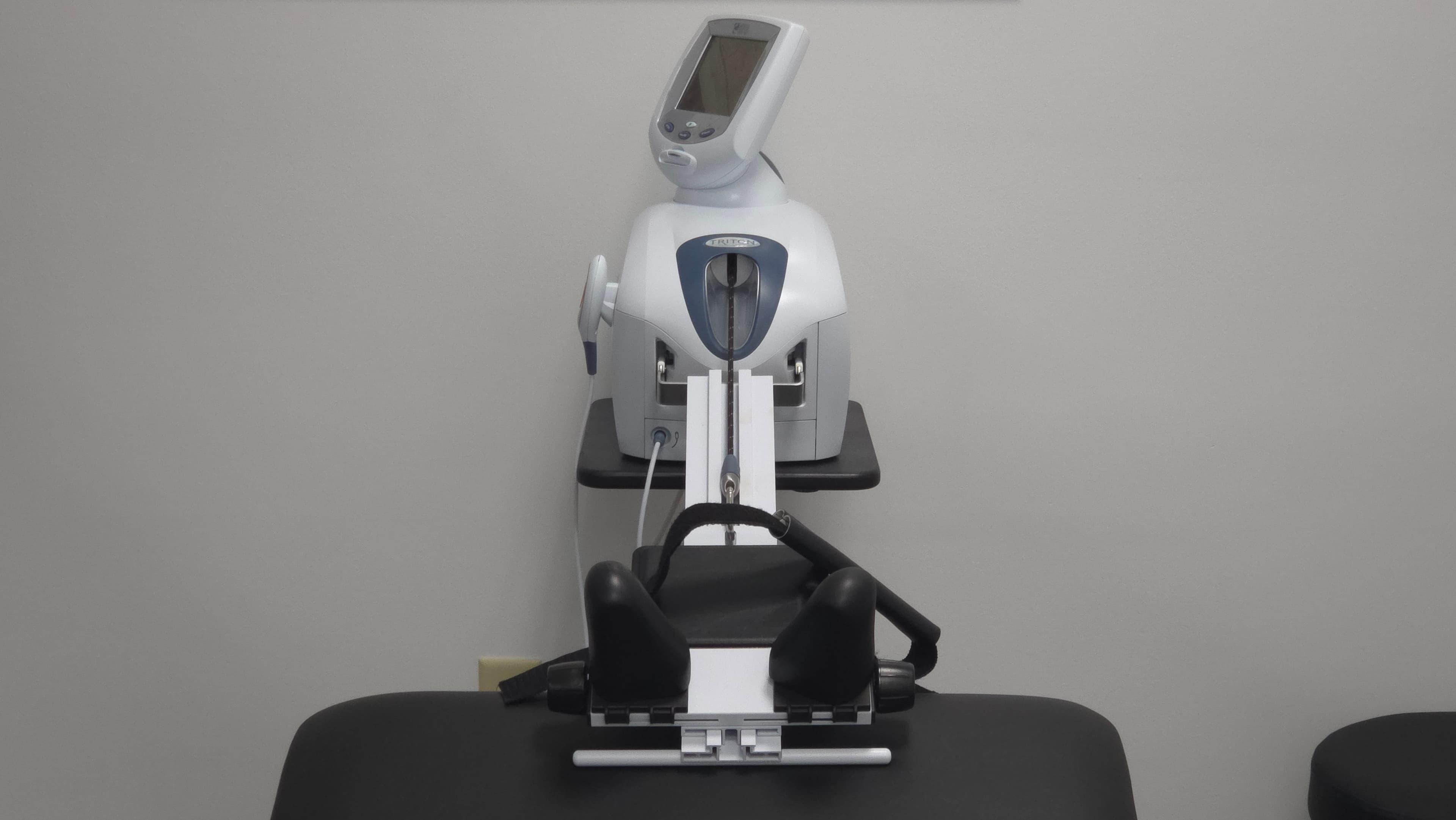
Non-Surgical Traction
Decompression
Non-surgical spinal decompression that relieves pressure on discs and nerves.
Explore serviceRelated Conditions



Ready to address the source of your leg pain?
Schedule a consultation to evaluate what may be irritating the nerve and discuss conservative options for improving movement, reducing symptoms, and restoring daily function.